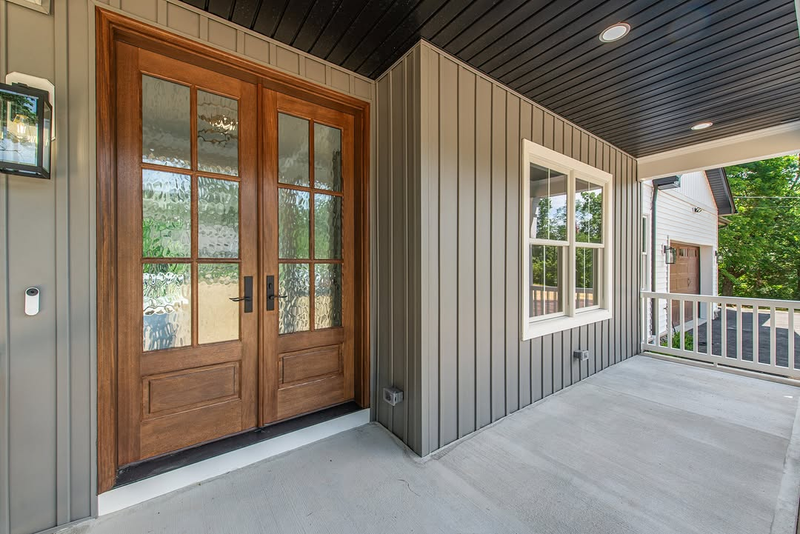
Multipoint Locking Systems Explained
A multipoint locking system secures an exterior door at the top, center, and bottom instead of relying on a single latch and deadbolt. This creates a stronger, more stable, and more secure exterior entry door, especially for taller or premium doors, while delivering a smoother and more confident locking experience than a standard tubular lock.
What Is a Multipoint Locking System?
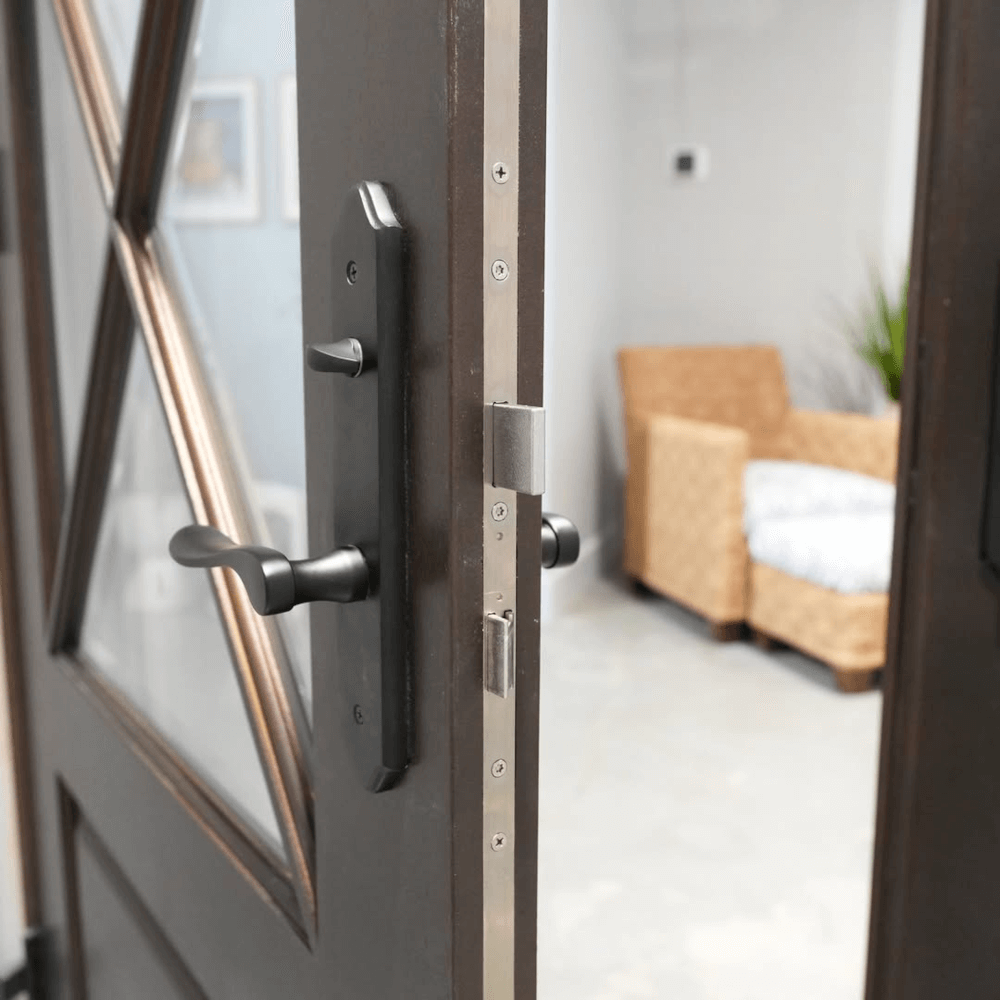
A multipoint locking system is an exterior door locking mechanism that engages multiple locking points along the height of the door. Rather than securing the door at only one location near the handle, a multipoint system locks the door into the frame at three positions: top, center, and bottom.
This distributed locking approach dramatically improves how the door performs day to day. The door feels more solid when closed, stays properly aligned within the frame, and resists flexing or movement that can occur with single point locking systems.
Automatic multipoint systems add another layer of convenience by engaging the top and bottom latch points as soon as the door is closed, without requiring the handle to be lifted.
How Automatic Three Point Locking Works
Multipoint systems secure the door at the top, center, and bottom, creating a reinforced seal and significantly increasing resistance against forced entry. The result is a smoother, safer, and more reliable locking experience for premium entry doors.
Operation is simple. Close the door, and the automatic latchbolts immediately project and lock into place, preventing them from being forced back. At this point, the door is already mechanically secured.
A turn of the key or thumb turn then engages the center deadbolt. When locked, the center deadbolt ties all three locking points together, forming a true three deadbolt locking system. This holds the door firmly in place along its full height rather than concentrating force at a single location.
Why Multipoint Locking Is Especially Important for Tall Doors
As exterior doors become taller, commonly 8 foot exterior doors and above, they are exposed to greater forces from wind pressure, gravity, and normal use. A traditional tubular latch and deadbolt secure the door at one point, allowing the top and bottom of the door to move independently over time.
This movement can lead to a door that feels loose, difficult to operate, or visually out of alignment. Hinges and frames are also placed under greater stress when the door is not held evenly along its height.
Multipoint locking systems solve this problem by securing the door at multiple locations. By locking the door at the top, center, and bottom, the door remains square in the opening, maintains consistent contact with the frame, and feels noticeably more stable every time it is opened and closed.
Security Advantages Over a Standard Tubular Lock
From a security standpoint, multipoint locking systems offer a meaningful upgrade over traditional tubular locks and single deadbolts.
With a standard lock, all resistance to forced entry is concentrated at one point. With a multipoint system, force is distributed across three separate locking points spaced along the door. This makes prying, flexing, or twisting the door far more difficult.
The door is physically anchored into the frame at multiple locations, which increases resistance against forced entry while also reducing stress on any single component of the locking system.
Multipoint Locking vs Traditional Tubular Locking Systems
When comparing multipoint locking systems to traditional tubular locks, the differences are clear:
-
Locking force is distributed along the height of the door rather than concentrated at one point
-
Doors feel more rigid, stable, and secure when closed
-
Alignment is maintained over time, especially on taller doors
-
Resistance to forced entry is significantly improved
-
The locking experience feels intentional and premium
For customers investing in high quality exterior doors, especially taller or heavier designs, a tubular lock and single deadbolt often become the limiting factor in overall door performance.
Hardware Selection Guide for Customers With Multipoint Doors
This section is intended to help customers who have purchased a door with multipoint locking select the correct handleset hardware.
The multipoint system is designed for use with a lever handleset with the cylinder positioned above the handle. This layout provides the proper geometry required for multipoint operation while maintaining a traditional and familiar appearance from the exterior.
The most compatible and commonly selected hardware is from Emtek, which aligns with their Door Configuration 2 specification. This configuration places the American cylinder above the handle and is supported across a wide range of lever styles and finishes, making it easier to coordinate hardware with the overall door design.
Example: Double Door Configurations
Here is a common example using double entry doors:
-
Right hand active in swing door
-
Function: Keyed with American cylinder
-
Handing: Right hand
-
-
Left hand inactive door
-
Function: Dummy pair
-
Handing: Left hand
-
In this configuration, the right hand door handles daily operation and security. When the door is closed, the automatic latch points engage immediately. When locked, the three point system secures the door from top to bottom, creating a solid and stable entry system that feels substantially different from a standard double door with a single point lock.
Final Thoughts
Multipoint locking systems play a critical role in how an exterior door performs, not just how it locks. By securing the door at the top, center, and bottom, they improve security, stability, and long term reliability while delivering a noticeably better day to day experience.
For homeowners comparing multipoint locking to a standard tubular system, the difference is clear. Multipoint locking is a foundational component of a well engineered entry door and an important consideration for any premium exterior door investment.
If you are planning a new entry door or already exploring doors with multipoint locking, our team is here to help. We can guide you through door styles, configurations, and performance features so you can choose the right entry system for your home with confidence.
Explore exterior door collections or contact us for personalized guidance.