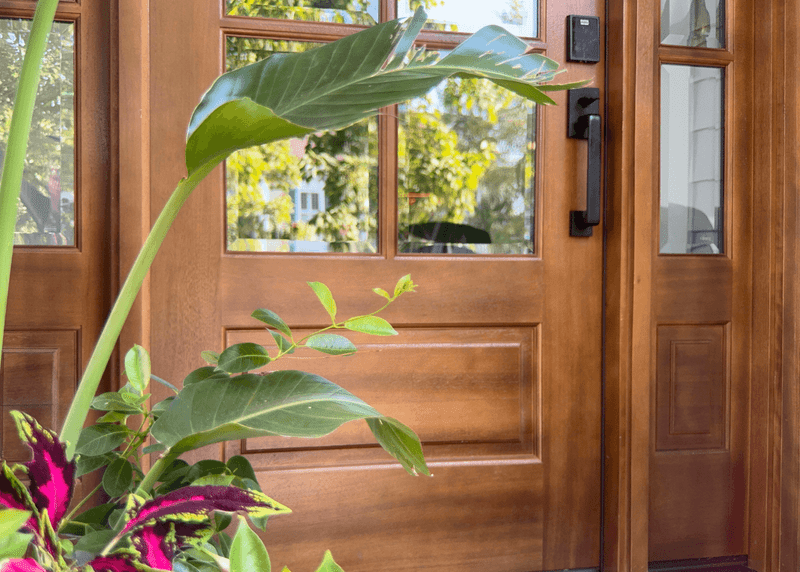
Low-E glass is glass with a microscopically thin metallic coating that reflects heat while allowing visible light to pass through. It improves energy efficiency by reducing heat loss in cold weather and limiting solar heat gain in warm conditions. Slight blue, green, or purplish color shifts under certain lighting are normal and result from the Low-E coating.
Low-E Glass Explained: What It Is and How It Works
Low-E stands for low emissivity. Low-E glass is treated with a nearly invisible metallic coating that alters how heat energy moves through the glass. While the glass still allows natural daylight to pass through, the coating reflects infrared energy, which is the heat you cannot see. This technology is commonly used in exterior entry doors with insulated glass to improve overall performance.
This reflective behavior is what makes Low-E glass effective. In colder conditions, it helps keep interior heat inside the home. In warmer conditions, it helps reflect exterior heat away from the interior. The result is more stable indoor temperatures and improved comfort throughout the year, especially in glass entry doors exposed to direct sunlight.
Why Low-E Glass Matters for Energy Efficiency
Standard glass allows a significant amount of heat transfer. Low-E glass reduces that transfer by controlling radiant heat, which is one of the primary contributors to energy loss and gain through windows and doors.
Key benefits include:
-
Reduced heat loss during colder months
-
Improved control of solar heat gain during warmer months
-
Lower demand on heating and cooling systems
-
More consistent indoor comfort near glass surfaces
These benefits are often reflected in performance ratings such as U-factor and solar heat gain coefficient (SHGC), which are commonly used to compare insulated glass performance.
Understanding Glass Performance Ratings
When evaluating Low-E glass, two performance metrics are especially helpful.
U-factor
U-factor measures how readily heat flows through a window or door assembly. Lower values indicate better insulating performance. A lower U-factor generally means less heat loss in cold conditions.
Solar Heat Gain Coefficient (SHGC)
SHGC measures how much solar heat passes through the glass. Lower values reduce heat gain from sunlight, which can be beneficial in warmer climates or for doors with significant sun exposure.
Some products may also list visible transmittance, which indicates how much visible light passes through the glass. Low-E coatings can slightly affect this value depending on the coating type.
Why Low-E Is Especially Important for Exterior Doors
Exterior doors often include glass that is closer to living spaces and frequently exposed to direct sunlight. Unlike windows that may be shaded by overhangs or landscaping, entry doors are often fully exposed.
Low-E glass in doors helps:
-
Reduce uncomfortable hot or cold zones near the entry
-
Minimize radiant chill in winter and overheating in summer
-
Maintain consistent comfort in high traffic areas of the home
These benefits are especially noticeable in doors with larger glass areas, sidelights, or transoms.
Does Low-E Glass Change How the Glass Looks?
In most cases, Low-E glass appears clear and neutral. However, under certain lighting conditions, you may notice a faint blue, green, or slightly purplish tint or a subtle haze.
This effect is most noticeable when bright sunlight hits the glass at an angle, especially if the glass is partially shaded. The appearance is not caused by dirt, moisture, or a surface film. It is an optical effect created by how light interacts with the metallic coating.
Is a Blue or Hazy Appearance a Defect?
No. A subtle color shift or light haze under specific lighting conditions is a normal characteristic of Low-E coated glass. It is a byproduct of the same coating that provides energy efficiency benefits.
This type of appearance is typically uniform and changes with viewing angle and light conditions. It should not be confused with fogging or moisture trapped between panes, which can indicate a seal failure and would require evaluation.

Image shown: Low-E insulated door glass showing a subtle blue haze under sunlight, a normal visual effect of the energy efficient coating and not a defect.
Low-E Glass Summary and Key Takeaways
Low-E glass plays an important role in improving the comfort and energy performance of exterior doors by reducing heat transfer while still allowing natural light to enter the home. The microscopically thin coating helps manage both heat loss in colder conditions and solar heat gain in warmer environments, contributing to more consistent indoor temperatures year-round. Visual characteristics such as subtle color shifts under certain lighting are a normal result of the coating and not a defect. When selecting an exterior door with glass, Low-E coatings are a practical, proven feature that supports long-term comfort and performance.
Explore Exterior Doors with Low-E Glass at Grand Entry Doors
At Grand Entry Doors, we offer exterior entry doors designed with performance in mind, including insulated glass options featuring Low-E coatings for improved comfort and energy efficiency. Each collection includes a wide range of styles, glass designs, and configurations to help you find the right door for your home with confidence.
Explore exterior door collections to compare designs, glass options, and configurations, or contact our team if you have questions about selecting the right entry door for your climate, exposure, and project requirements.
Frequently Asked Questions About Low-E Glass
What does Low-E mean?
Low-E means low emissivity. It refers to a thin, transparent metallic coating applied to glass that reflects heat while allowing visible light to pass through.
Why is Low-E glass important?
Low-E glass improves energy efficiency and comfort by reducing heat transfer through glass. It helps retain interior heat in cold weather and limits unwanted solar heat gain in warm conditions.
Does Low-E glass block UV rays?
Many Low-E glass packages reduce ultraviolet transmission as part of their overall design. The exact level of UV reduction varies by coating and glass configuration.
Why does Low-E glass sometimes look blue, green, or slightly purple?
Low-E glass may appear blue, green, or slightly purple because of the microscopically thin metallic coating, often involving silver, that reflects heat. That same coating can reflect and scatter certain wavelengths of visible light. Under specific lighting conditions, such as direct sun on a shaded pane, this can appear as a subtle tint or haze. This is normal and is a result of the Low-E coating working as designed.
What causes the “blue haze” effect?
The effect comes from light scattering as it interacts with the glass and coating. It can look like a fine film but cannot be cleaned off because it is not on the surface. It is an optical characteristic, not a defect.
Is Low-E glass mirrored so you cannot see inside?
No. Low-E glass is not mirrored and does not provide privacy by itself. The coating is microscopically thin and transparent, designed to reflect heat, not act as a one way mirror. Under certain lighting conditions, such as bright daylight outside and darker conditions inside, the glass may appear slightly more reflective from the exterior. This is a normal lighting effect and does not prevent visibility into the home once interior lights are on or lighting conditions change. Privacy in glass doors is determined by glass texture or obscurity level, not by the Low-E coating.
When should glass appearance be a concern?
If you see persistent fog or moisture between glass panes, that may indicate a seal failure. A faint tint or haze that changes with lighting or viewing angle is typically normal for Low-E glass.