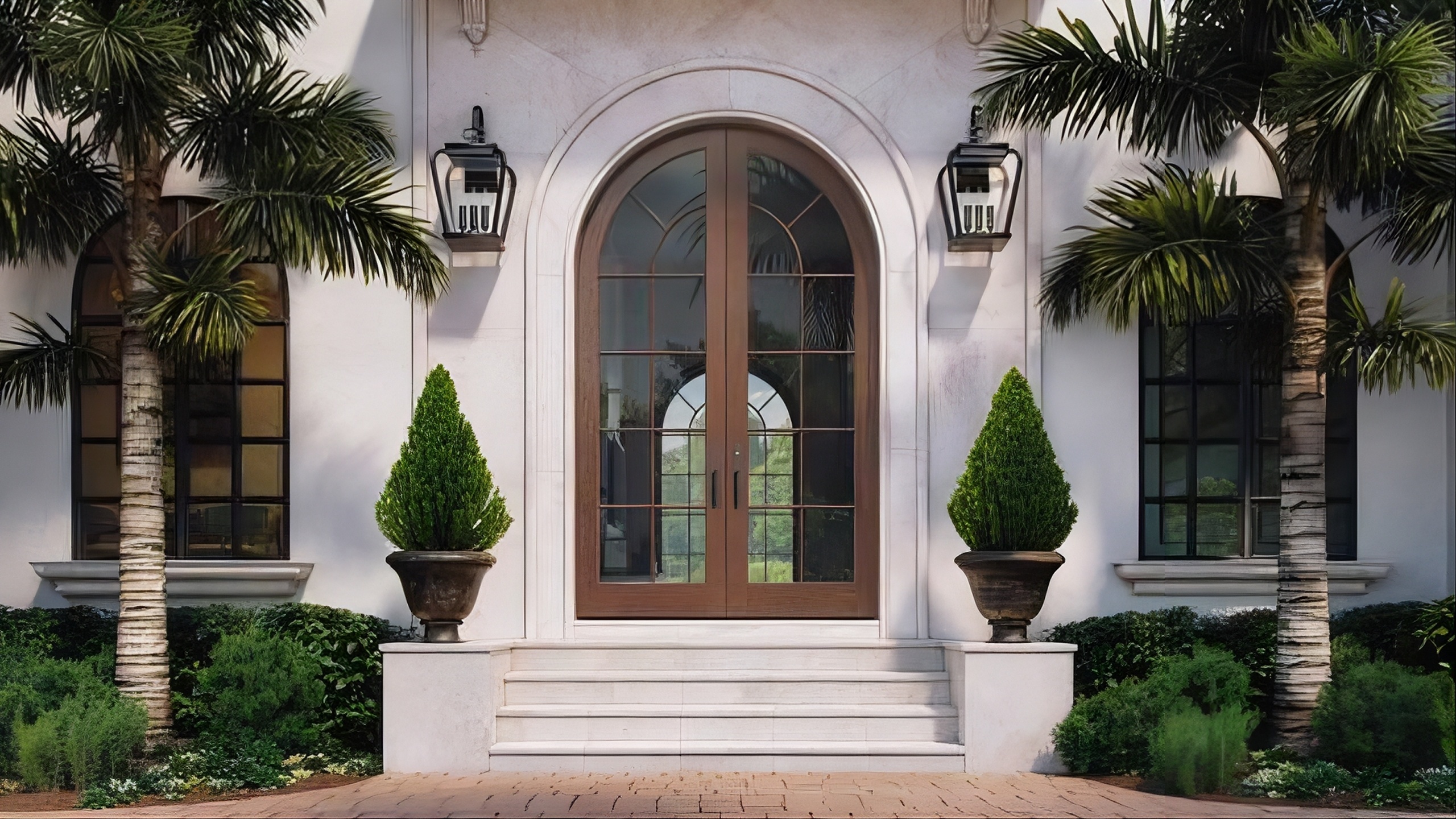
Coastal and impact-rated exterior doors are engineered to stand up to hurricanes, high winds, and salt-laden marine environments without sacrificing architectural beauty. At Grand Entry Doors, we build our doors from mahogany, white oak, or cypress, in configurations that meet coastal codes, including wind-borne debris regions, HVHZ, and Miami-Dade standards. If you need a door for a new coastal build, a hurricane-zone renovation, or any project where severe weather is a serious consideration, we would love to craft a door for you.
Coastal and Impact Doors
What Are Coastal and Hurricane Impact Front Doors?
Coastal and hurricane impact-rated exterior doors are engineered to do what standard entry doors can’t: stand up to hurricane-force winds, flying debris, and years of corrosive salt air while still serving as the architectural focal point of a home.
In regions like Florida, the Gulf Coast, and the Outer Banks, building codes require these specialized doors for any opening that is exposed to severe weather, and for good reason. A door that fails during a hurricane doesn't just break: it can compromise the entire building and lead to catastrophic interior damage from wind pressure and water intrusion.
Understanding Coastal Door Requirements
If you're new to coastal building codes, it can be overwhelming trying to keep them all straight. Here are a few of the terms and standards that come up frequently. Knowing them makes ordering the right door much faster and easier.
- HVHZ (High Velocity Hurricane Zone) refers to areas with the strictest building requirements in the country, specifically the Miami-Dade and Broward counties in Florida. Products installed in these zones must pass rigorous large missile impact testing and meet specific pressure requirements.
- Miami-Dade NOA (Notice of Acceptance) is a separate certification specific to the HVHZ counties and represents the most stringent product approval in the United States.
- Wind-Borne Debris Region is a broader area along the U.S. coastline where building codes require impact protection for any opening, including doors. These zones generally extend from Texas to New England (the Gulf and Atlantic coasts).
- Design Pressure (DP) Rating measures the structural load a door can withstand from wind pressure, expressed in pounds per square foot. Coastal projects typically require higher DP ratings than inland construction, and the exact rating needed depends on building height, exposure category, and local wind speeds.
- Florida Product Approval is a statewide certification confirming that a product meets Florida Building Code requirements. Each approved configuration carries an FL number that can be referenced during permitting.
Learn more about code compliance and our doors.
What Makes Exterior Impact Doors Different
Every door in this category is crafted from hand-finished hardwood and is available in mahogany, white oak, or cypress. Beyond meeting local and regional codes, a coastal impact-rated door is engineered differently from standard exterior doors.
- Reinforced stile and rail construction with Laminated Strand Lumber (LSL) cores add stability and prevent flexing under pressure.
- Marine-grade plywood panels are engineered to repel moisture.
- Multipoint locking systems anchor the door to the frame at multiple points along the height rather than just at the lockset.
- Outswing configurations can be specified to meet HVHZ water infiltration requirements, adding an extra layer of protection against wind-driven rain.
- Impact glass uses a laminated interlayer that holds the glass together even when broken, preserving the building envelope when a window or door is struck by debris.
What separates a great coastal door from a merely compliant one is the way these performance features integrate with timeless design. Arch tops, simulated divided lite glass, v-groove panels, and a vast selection of sticking profiles let homeowners and architects find a door that meets the toughest codes without ever looking like it was built for them.
Configurations are available to meet coastal codes, including:
- Miami-Dade NOA
- HVHZ standards
- Florida Product Approval
These doors are ideal for:
- New coastal construction,
- Hurricane-zone renovations,
- Oceanfront estates,
- Barrier-island builds,
- Any inland project where severe weather is a concern
Because code requirements, design pressure ratings, wind zones, and site conditions vary from one area to the next, every door in this category is built to order and offered by quote so specifications can be matched precisely to the project. Contact us for a quote.
Hurricane Impact Exterior Doors Are Built for Coastal Living
Hurricane-rated doors are engineered to protect a home through the most severe storms while preserving the architectural beauty you want at the entryway. Every hurricane-rated door in this collection is crafted from hand-finished mahogany, white oak, or cypress and built to meet demanding coastal codes, including HVHZ and Miami-Dade standards.
Whether the project calls for a single impact-rated front door, a grand double-door entrance, or a configuration with sidelights and transoms, each one is built to order and matched precisely to the wind zone and design pressure requirements.
An impact door differs from a standard exterior door at every level. Reinforced stile and rail construction resists flex under wind pressure, multipoint locking systems anchor the door to the frame along its full height, and laminated impact glass holds together even when struck by flying debris. The result is an entry door that keeps the building envelope intact when it matters most.
Hurricane Impact Front Doors
A hurricane-rated front door is the centerpiece of any coastal home, and it has to perform as well as it looks. These front doors combine large missile impact resistance with the timeless detailing homeowners and architects expect, including arch tops, simulated divided lite glass, v-groove panels, and a wide range of sticking profiles.
Choose a single door for a refined, classic entrance, or scale up to a double door with sidelights for a more dramatic presence. Each of the front doors we build can be specified as an outswing configuration to meet HVHZ water infiltration requirements where local code calls for it.
Hurricane-Rated French Doors
Hurricane-rated French doors bring the elegance of paired glass-panel doors to homes in wind-borne debris regions without compromising on storm protection. Built with impact-rated laminated glass and reinforced construction, these doors deliver the open, light-filled look of traditional French doors while standing up to hurricane-force winds and pressure.
Available in mahogany, white oak, or cypress with divided lite glass patterns to suit the architecture, these doors are configured to order so the design pressure rating and code approvals match the specific coastal site.
Hurricane-Rated Patio Doors
For rear entries, courtyards, and outdoor living spaces in coastal zones, hurricane-rated patio doors offer wide views and seamless indoor-outdoor flow with the same storm protection as the entry doors in this collection. These doors are engineered with impact glass and multipoint hardware to meet coastal code requirements, connecting a living space to a deck, pool, or ocean view with confidence through hurricane season. Like every door in this category, these patio doors are built to order and offered by quote so specifications align with the wind zone, exposure category, and Florida Product Approval needs.
Order Hurricane Rated Exterior and Entry Doors for Your Home
From the front of the home to side and rear entrances, every hurricane-rated exterior door in this collection is designed to protect a specific opening in the building envelope. Because a single failed opening during a storm can compromise an entire structure, specifying hurricane-rated exterior doors for all vulnerable entries is one of the most important decisions in a coastal build or renovation.
These impact doors are available in single and double configurations, with or without sidelights and transoms, in arch top and square top styles. Every hurricane-rated entry door is engineered with Laminated Strand Lumber cores, marine-grade plywood panels that repel moisture, and finishes built to withstand corrosive salt air.
Whether your project needs one impact door for a single entrance or a coordinated set of hurricane-rated doors for an entire home, each is configured specifically for your project during the quote process so it will pass inspection and perform the way a coastal door should.
Building or Renovating on the Coast?
Whether the project is a new oceanfront build, a hurricane-zone renovation, a barrier-island estate, or an inland property where severe weather is a serious threat, the right door starts with a consultation.
Request a quote on any of our impact doors, and a specialist will help you spec out a door from frame to finish, with code compliance, design pressure, and architectural intent all accounted for before production begins.
Impact Door FAQ
Do I need a hurricane impact door?
It depends on your location, your local building code, and where on the building the door is installed. Properties in HVHZ counties, wind-borne debris regions, and many coastal jurisdictions require impact protection for exterior openings. For projects outside these zones, impact rating is optional but often chosen for added security and peace of mind. A consultation with a local code official or your architect is the best way to confirm what's required for your specific site.
What's the difference between impact-rated and hurricane-proof doors?
No door is truly hurricane-proof, but impact-rated doors are tested to withstand the wind pressure and flying debris associated with major hurricanes. Impact rating is a certification based on standardized testing. "Hurricane-proof" is a marketing term that doesn't have a real definition.
Can I get a coastal style door without the impact rating?
Yes. Every design in this category can be configured as a non-impact door for homes that fall outside of coastal code requirements. The same wood species, panel profiles, divided lite options, and finishes are available either way. Let a member of our team know if you need an impact or non-impact door during the quote process.
What wood species are available?
Mahogany, white oak, and cypress. Each offers a distinct grain character and tonal range. Mahogany features a deep, rich color with fine grain and is the most traditional choice for coastal architecture. White oak shows pronounced grain, ages beautifully, has a more contemporary feel. Cypress is naturally rot-resistant and well-suited to coastal environments, with a softer, warm tone.
How long does a custom coastal door take?
Standard lead time is 10 to 12 weeks from the date drawings and specifications are approved. Because every door is built to order, lead time begins after the quote, drawings, and final specifications are confirmed.
Are these doors Florida Product Approved?
Florida Product Approval is available depending on the configuration and specifications you choose. Not every combination of size, glass, and configuration is approved for every code region, which is one of the reasons each of our impact doors are configured to order during the quote process.
Why are these doors offered by quote only?
Coastal projects involve too many variables for an off-the-shelf product. Local code, wind zone, design pressure, exposure category, building height, wall construction, and homeowner preferences all influence the final specification. A quote allows every door to be matched precisely to the project so it passes inspection and performs the way it should.
What kind of maintenance do coastal doors require?
Routine maintenance is essential for impact doors, especially in salt-heavy environments. Finishes should be inspected at least once a year, hardware should be cleaned and lubricated periodically, and weatherstripping should be checked for wear every year. Proper sealing of all six surfaces (including the top and bottom edges) is required at the time of installation and is a condition of the warranty.
How do I know what is required for my area?
Determining the requirements for a specific project is the responsibility of the customer, their contractor, and their structural engineers. Your project manager or engineer should provide site- and condition-specific engineering requirements.
Many factors contribute to the design and structural requirements for a given door, including whether the property sits in a wind-borne debris zone, a high velocity hurricane zone, or another jurisdiction with its own coastal building standards.
Requirements vary widely from one region to the next along the Gulf, Atlantic, and other storm-exposed coastlines. Some areas require only a design pressure rating and indicate that no protection for glazed openings is required. Others require protection for glazed openings, which could require impact glass or an otherwise approved protection system. In some cases, the door might require water penetration protection in addition to impact requirements.
Because these variables differ from one location and one opening to the next, confirm the exact requirements with local code officials and qualified professionals before building a door.